

Differential Equations
Define ordinary differential equations.
An ordinary differential equation (ODE) of the first order is an equation, containing the unknown function y=y(x), independent variable x, and the first derivative dy/dx.The general form of an ODE of the first order is F(x,y, dy/dx)=0
Find the general solution of dy/dx=2x+1
If dy/dx=2x+1 then y=x2+x+c (by integration)
Find the general solution of dy/dx=x2+2x-1
By integration y=1/3x3+x2-x+c
Find the function y(x) if dy/dx=2x and y(0)=-2
By integration y(x)=x2+c. So y(0)=c=-2. Thus y(x)=x2+c=x2-2
Find the general solution of the ODE dy/dx=2x/y
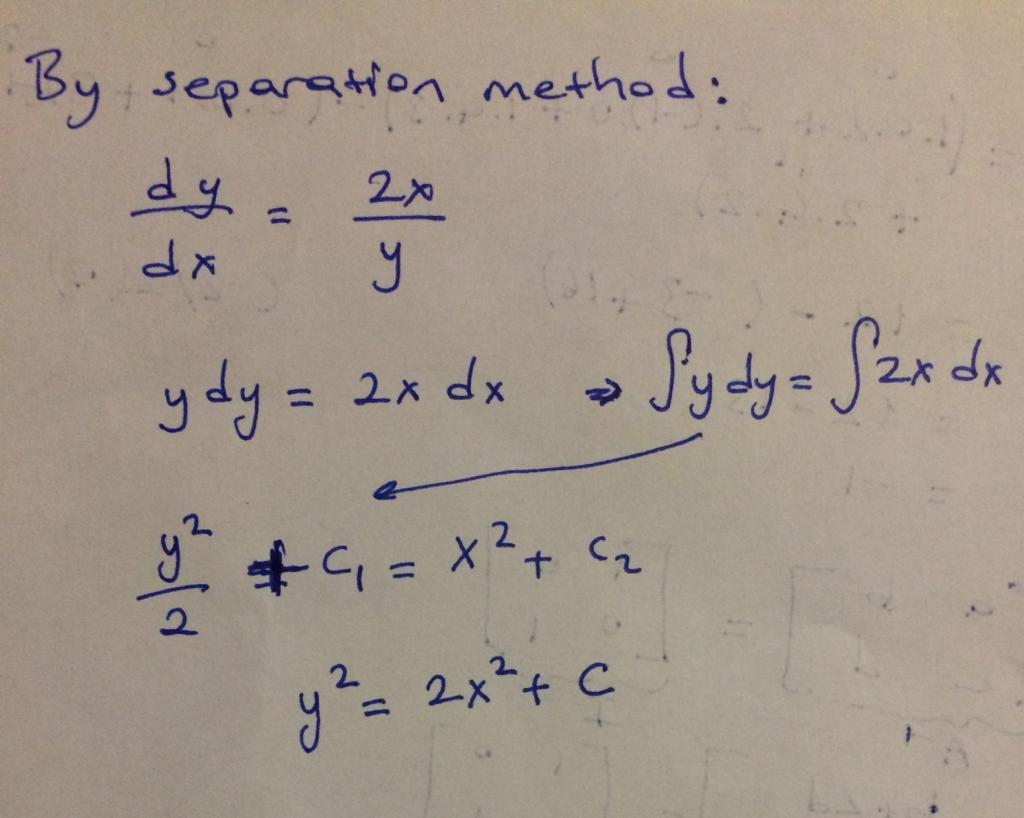
Find y(x) if dy/dx=(2x-1)/y and y(0)=3
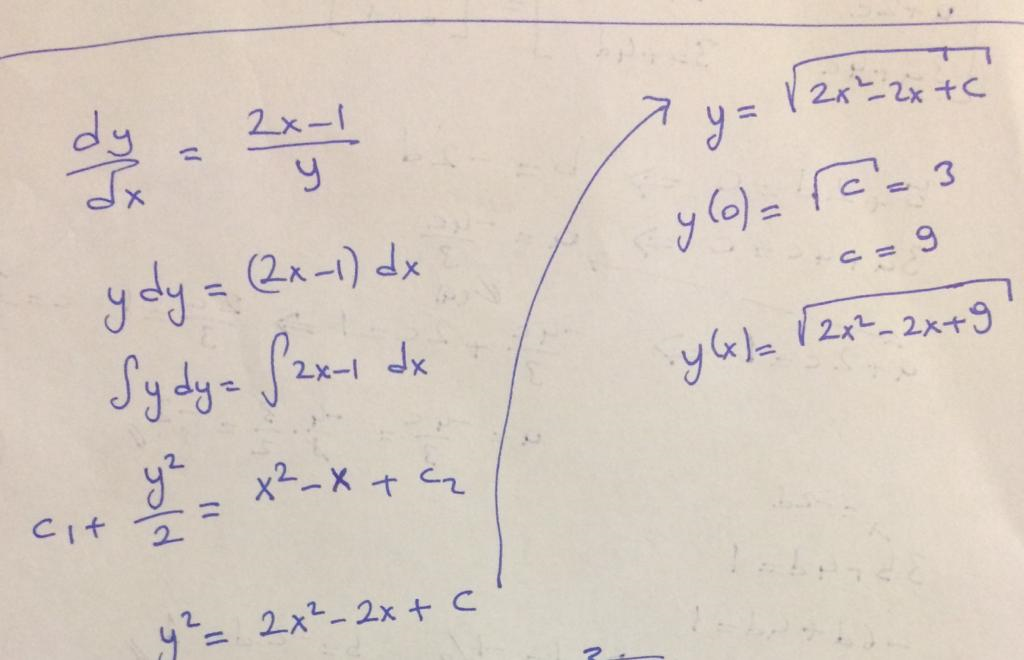
Find y if dy/dx-2y=0
dy/dx=2y
by seperation method:
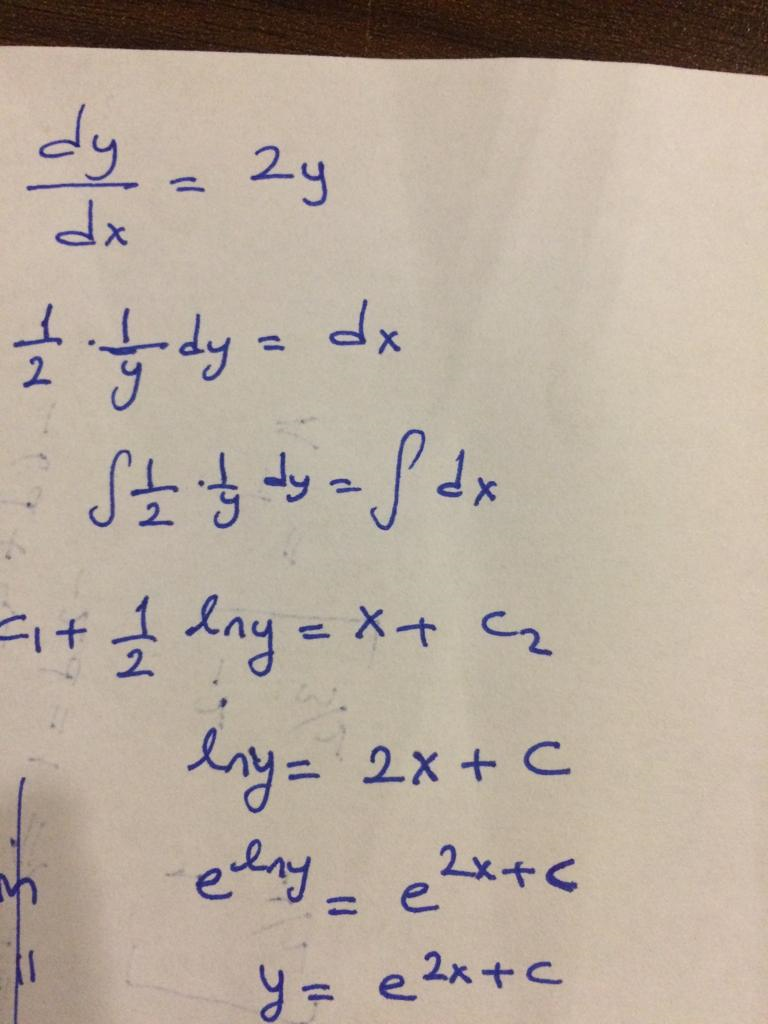
Find y(x) if dy/dx-xy=0
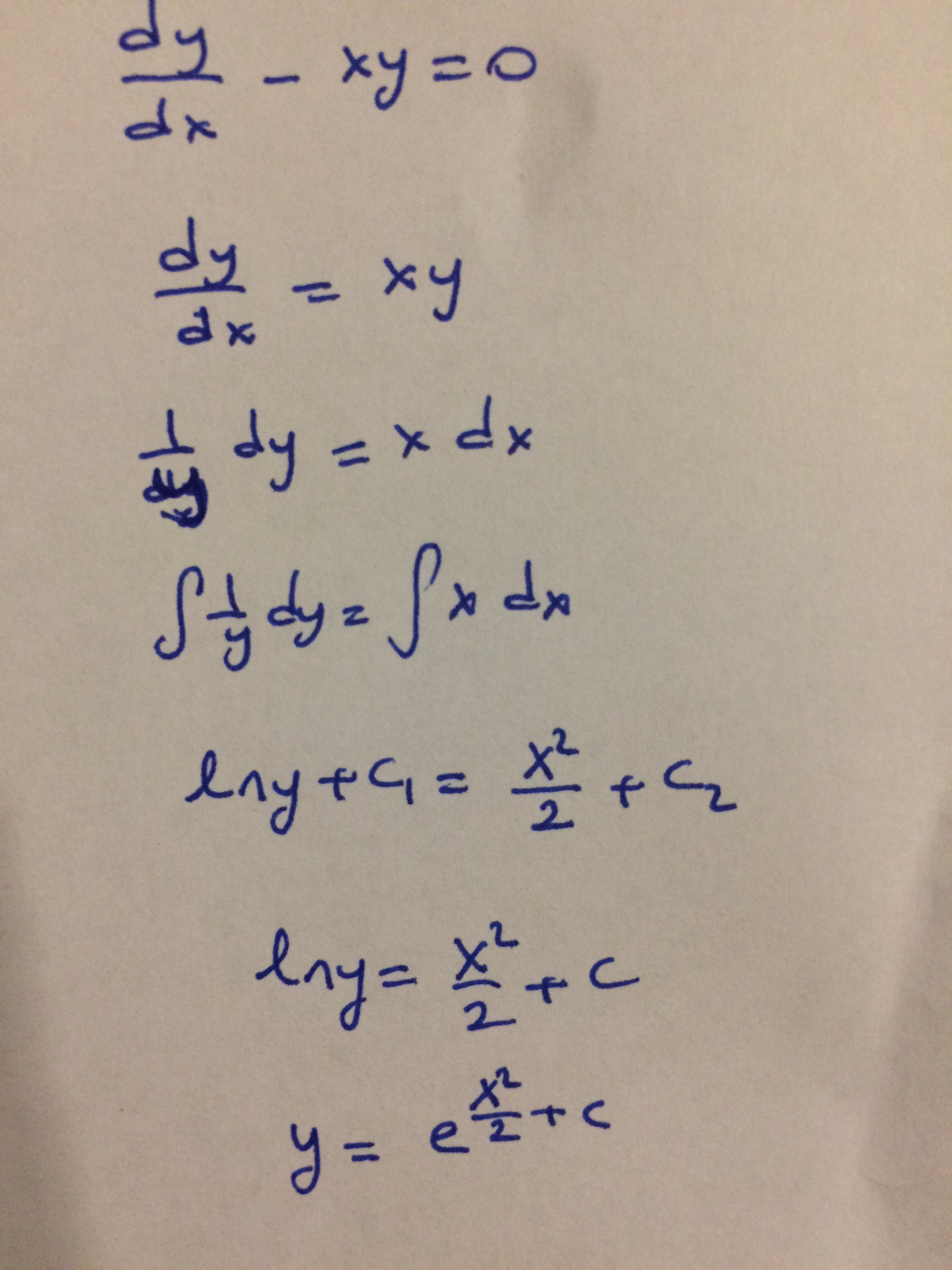
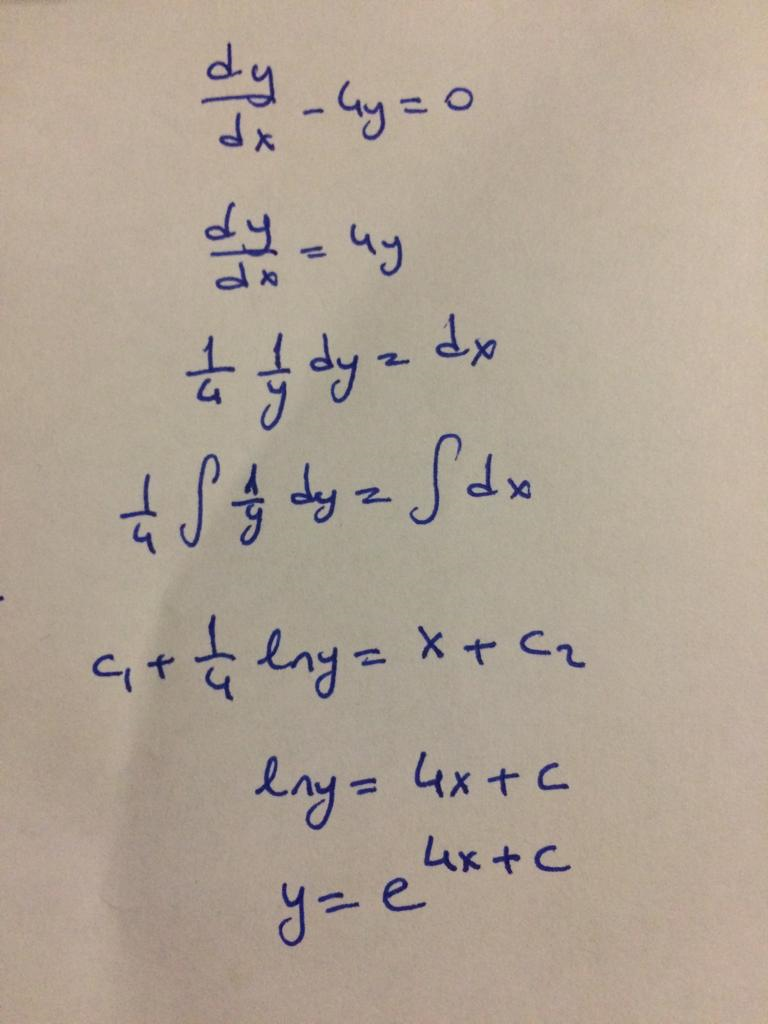
Find y(x) if dy/dx-4y=0
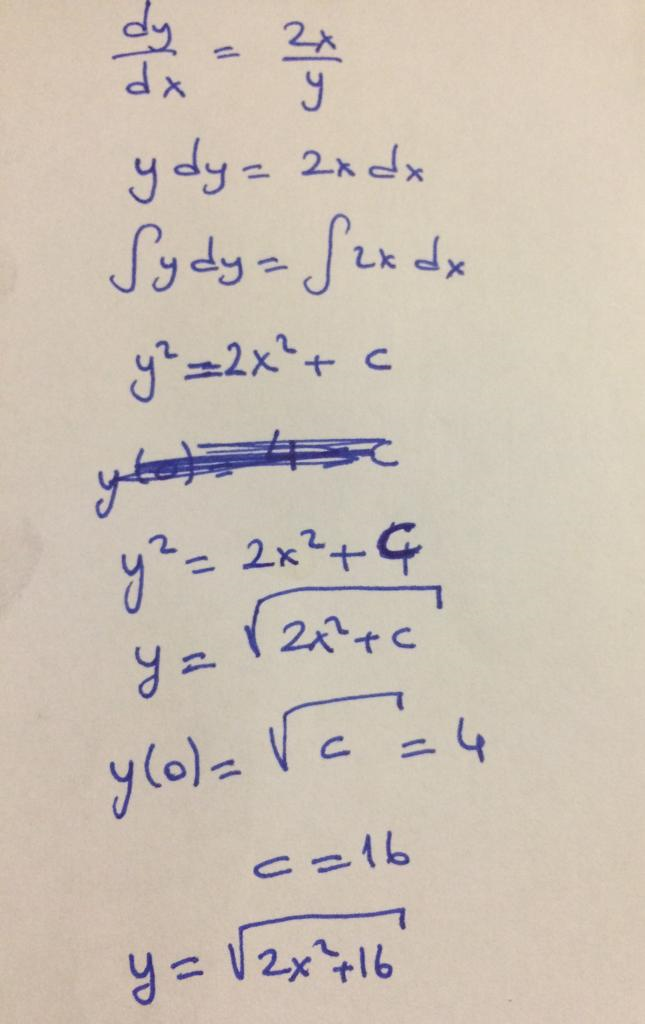
Find y(x) if dy/dx-2x/y=0 and y(0)=4
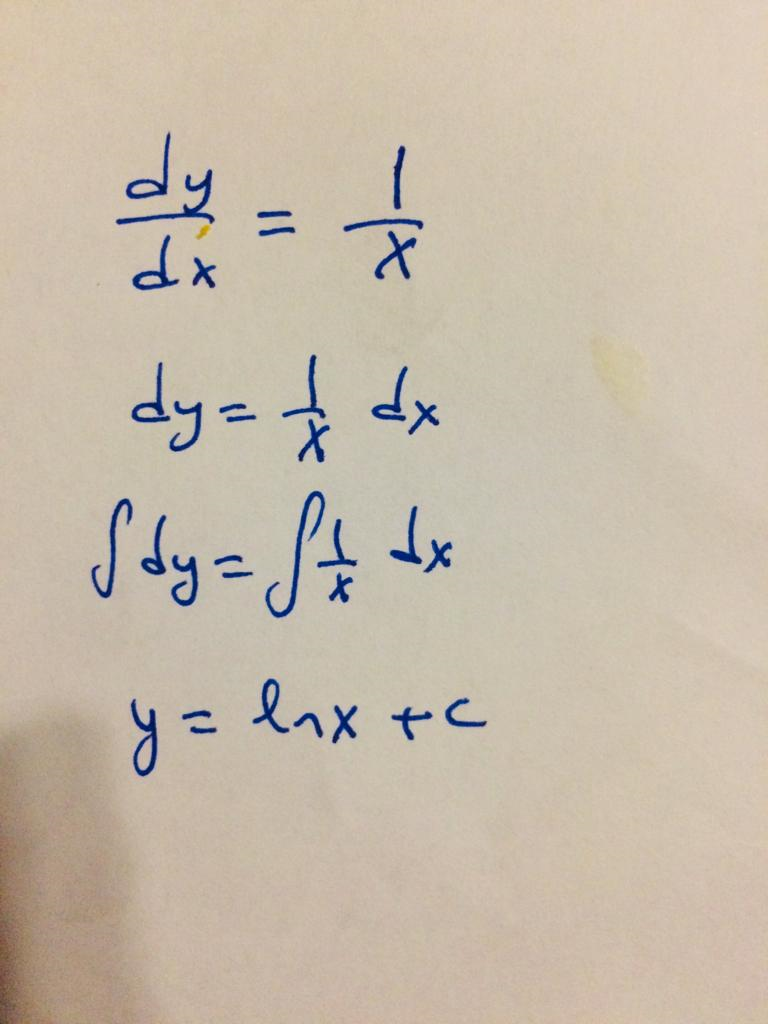
Find y(x) if dy/dx-1/x=0
There were 100 rabbits in a cage at the beginning. In 8 months the population of rabbits increased to 200. How many months would it take for population to increase to 300?
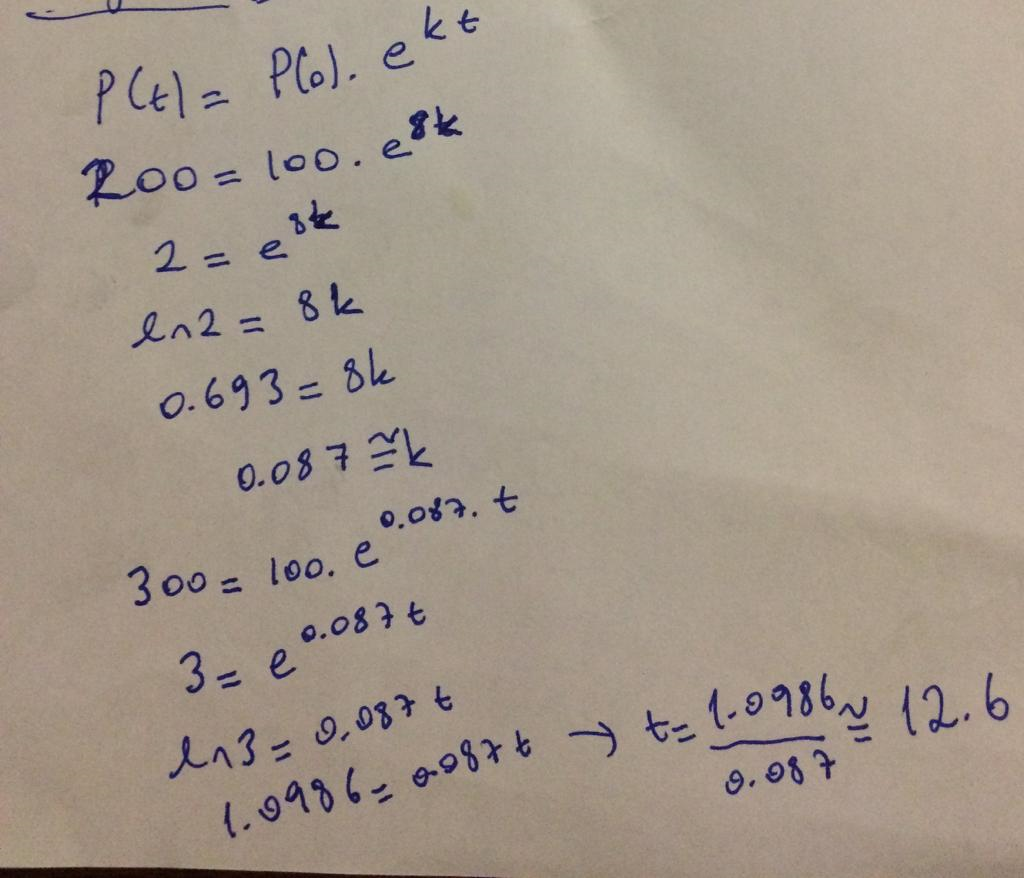
So the answer is 12.6 months.
A radioactive isotope has a half-life of 10 days. You wish to have 40 g at the end of 35 days. How much radioisotope should you start with?
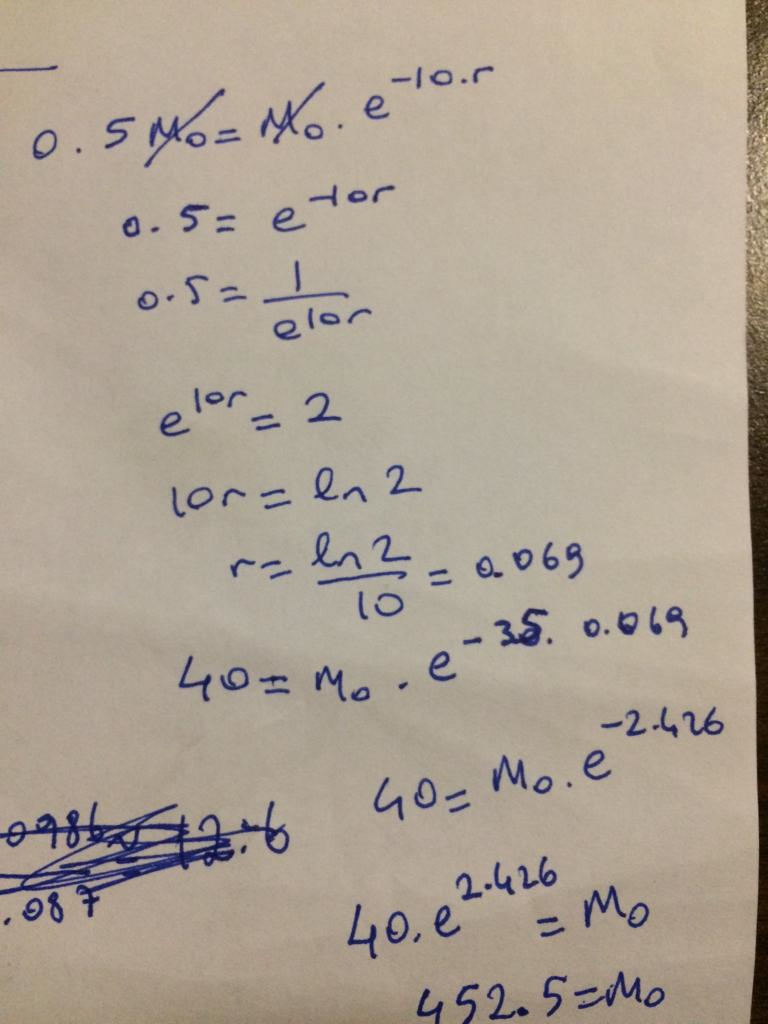
So the answer is 452.5 gr.
One can drink a coffee when its' temperature is at most 40 C. Assume that the temperature of the coffee cup was 70 C when it was put in to a can full of water whose temperature is 20 C. After 1 minute the temperature of coffee decreased to 60 C. In how much time the coffee will become drinkable? (its' temperature will decrease to 40?)
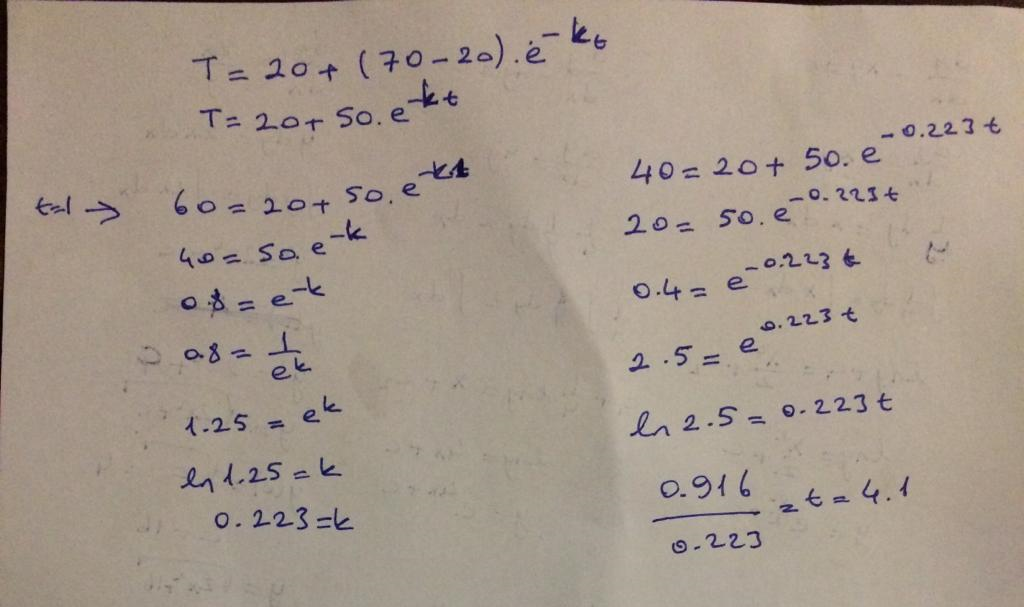
So the answer is 4.1 minutes.
Give an example where we can use logistic growth model of differential equations.
For example the number of the lions and antelopes would be a good example of logistic growth. When the number of antelopes is high, the population growth rate of the lions will be high. However, this in turn will cause a decrease in the number of antelopes, which causes back a decrease in the growth rate of lion population. Thus the growth rate of population of animals in restricted by the amount of food available.
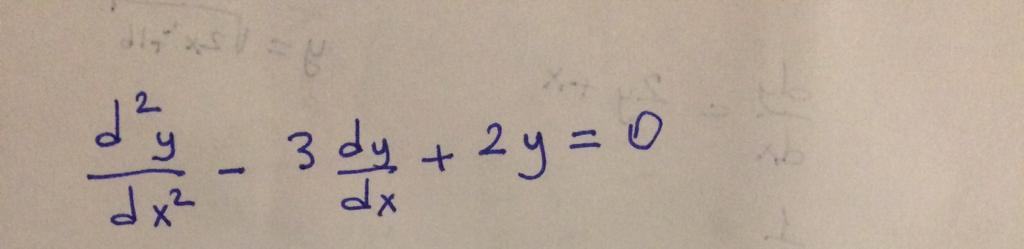
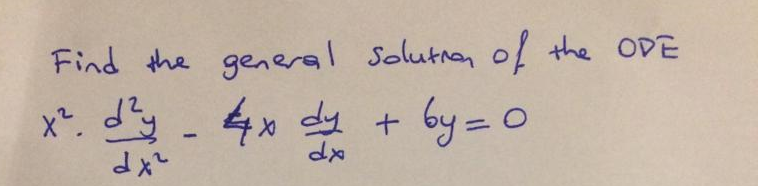
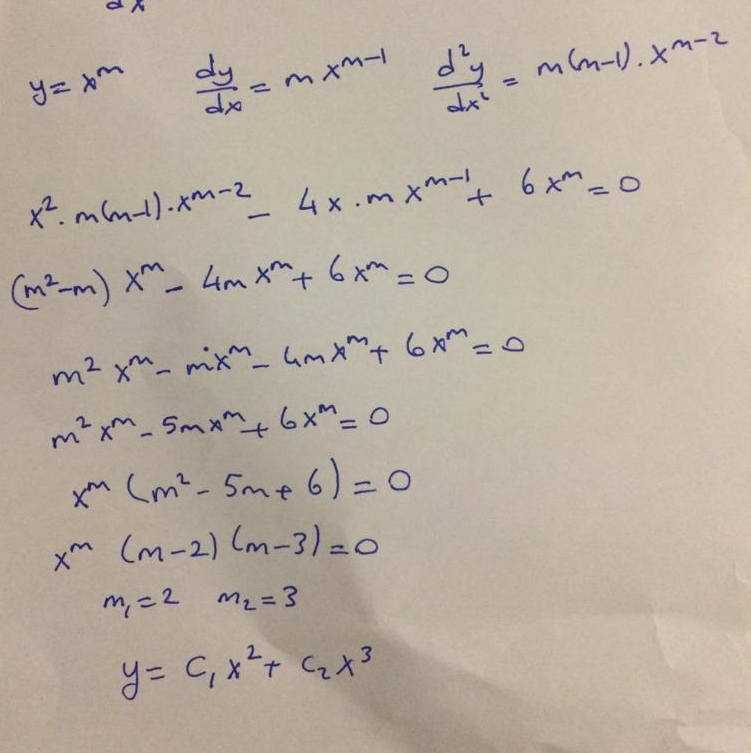
Find the general solution for the following differantial equation
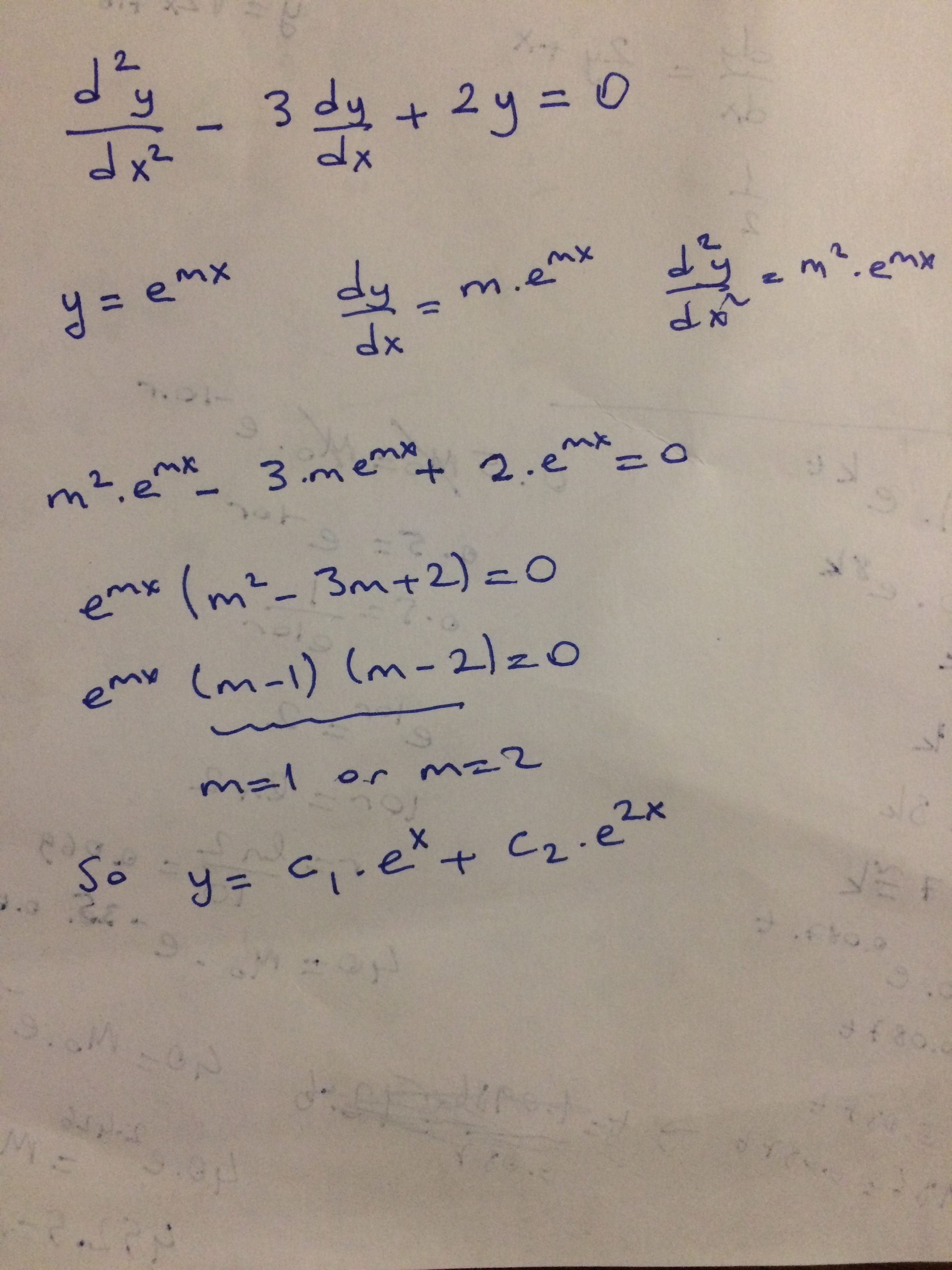
How can we solve a homogeneous linear ODE with constant coefficients?
A trial solution of the form y=emx should be substitute in the ODE, leading to a characteristic equation. If the ODE is of first order, then there is only one root m=m1, and the general solution is y=C1em1x. If the ODE is of second order, then there will be two roots m=m1 and m=m2 and the general solution is y=C1em1x+C2em2x
What are the main uses of differential equations?
Decay problems, compound interest, population inrease rate, heat problems, velocity and speed problems are most known uses.
What are the main types of the ordinary differential equations?
*DEs allowing separation of variables;
*linear ODEs;
*homogeneous linear ODEs with constant coefficients.